Despite conflict in the region, the Oppenheim Group, protagonist of the hit reality series, is bullish about its prospects in the UAE
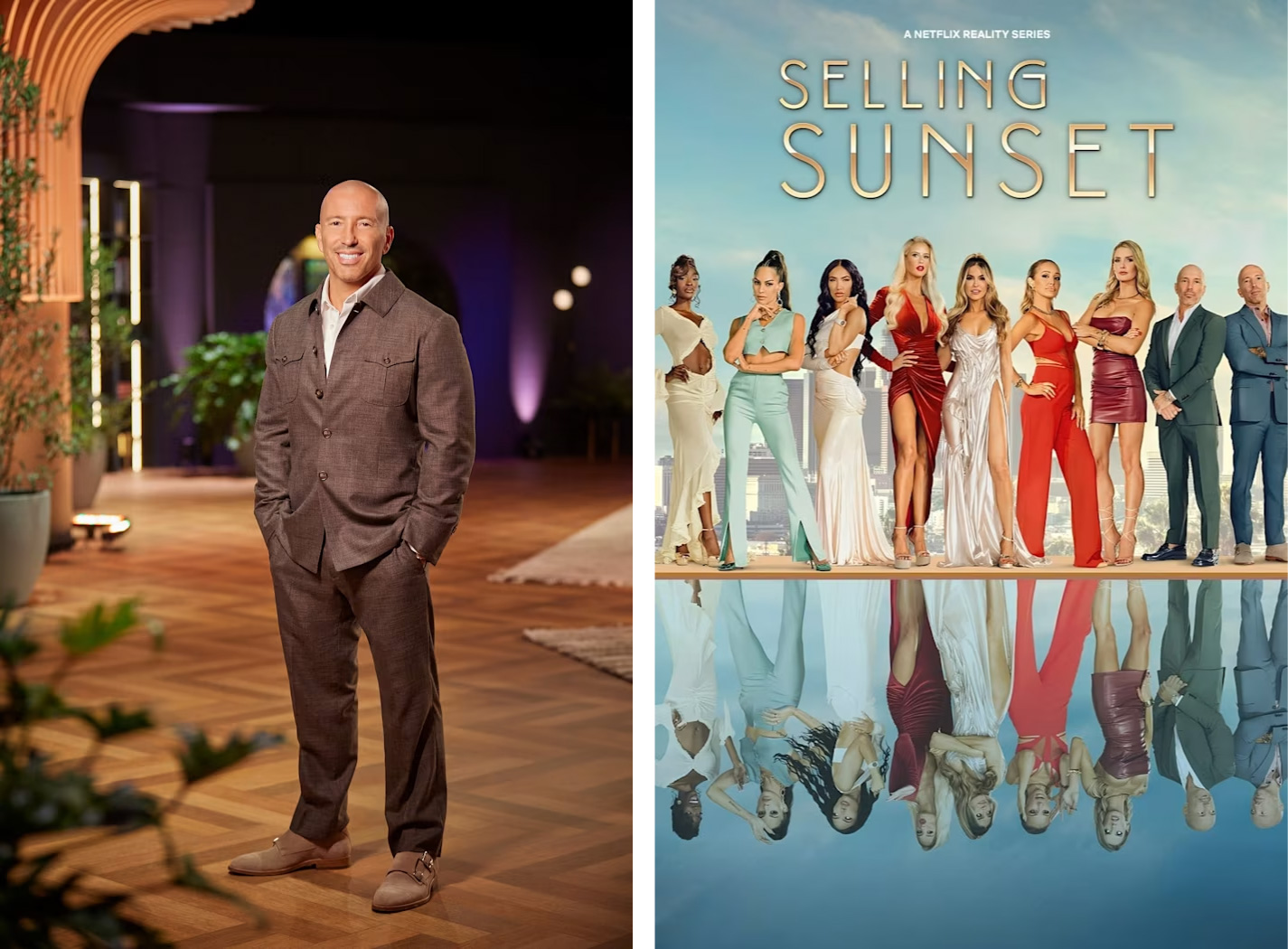
For about a week at the beginning of March, Omar Abaza wondered whether he had chosen the worst possible moment to bring one of the world’s most famous real estate brands to Dubai. The Oppenheim Group operates only four offices, but Netflix shows including Selling Sunset and Selling the OC have given it a reach far beyond that.
Its first outpost outside North America was barely two months from announcement when US and Israeli attacks on Iran triggered retaliatory strikes on Dubai on February 28, unsettling a property market that had spent years behaving as though gravity might no longer apply. A launch campaign had been prepared; several million dollars had already been invested. Managing partner of the Oppenheim Group UAE, Abaza had first set foot in Dubai only about 18 months earlier; now he was leading the group’s expansion into a market suddenly facing its first serious jolt in years.

He spoke repeatedly with Jason Oppenheim, the group’s president, in Los Angeles. Months later, when we meet on Zoom (Oppenheim in Los Angeles, Abaza in Dubai), I ask whether they had considered pausing the launch in September. Abaza barely hesitates and shakes his head. “We remained completely convinced.” Oppenheim goes further. “I really believe that this was a blessing in disguise.”
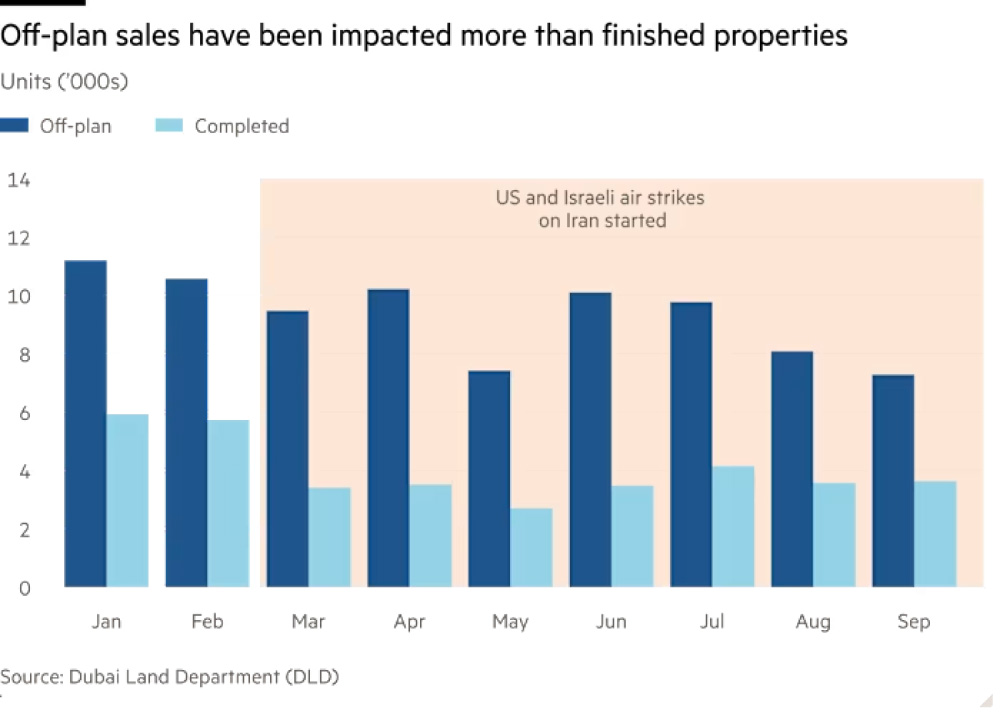
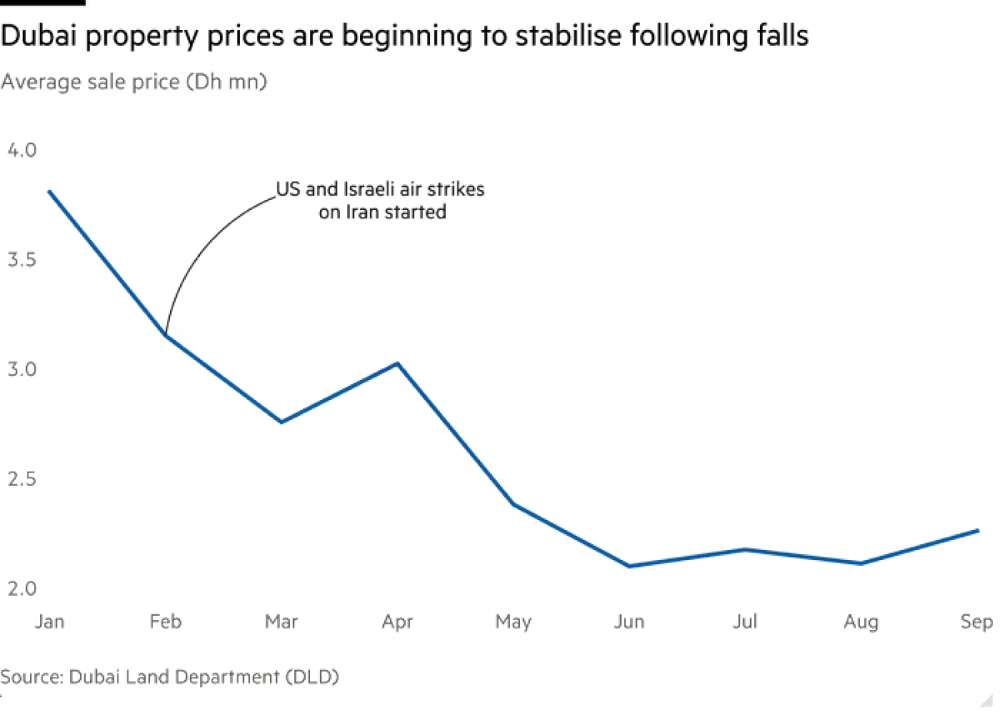
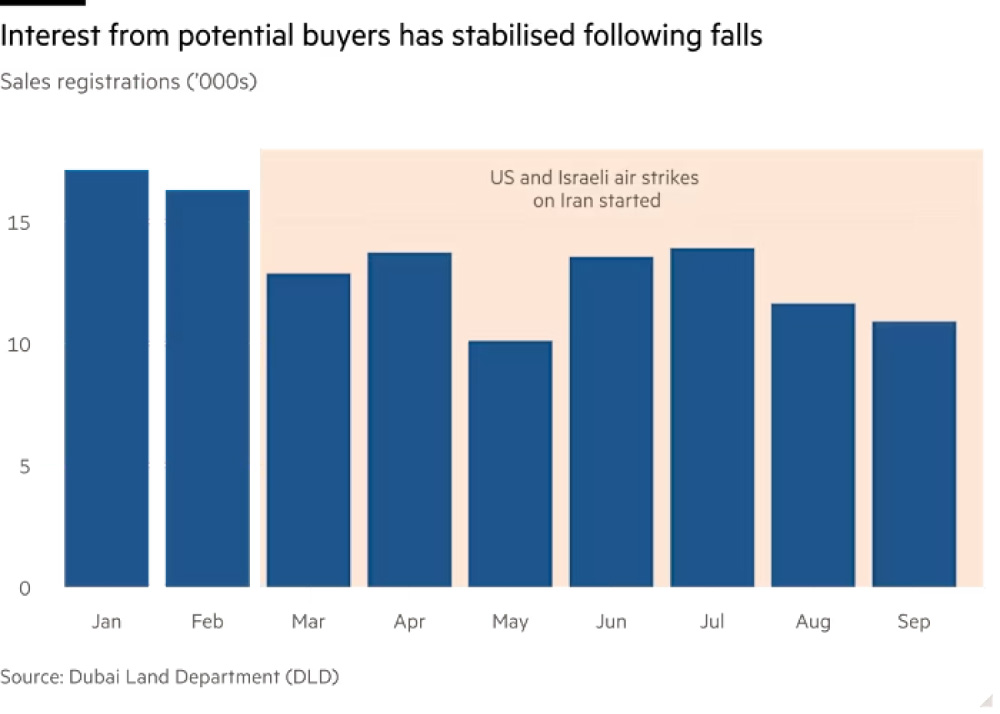
The phrasing is jarring, and Oppenheim knows it. “I don’t want to call any military conflict a blessing in disguise,” he clarifies. The market wobble was the blessing. In March, residential sales registrations across Dubai fell 21 per cent from the previous month, according to Dubai Land Department. “If the speculation wasn’t calmed in Dubai, [the property market] was not headed for a soft landing.” The conflict, in his telling, imposed the correction he had already thought was coming. Dubai Land Department data shows that by September, monthly transactions remained 36 per cent below January levels. Yet the average value of a sale, having fallen from Dh3.801mn ($1.03mn) in January to Dh2.09mn ($560,000) in June, had edged back up to Dh2.26mn ($610,000) by September. “Now you just have a slow burn, and that’s exactly what you want in every real estate market.”

But the benefits of a cooler market do not alone explain why Oppenheim was willing to press ahead. For all its global fame, the Oppenheim Group has kept a deliberately small physical footprint, with roughly 130 agents across three Southern California offices and a smaller operation in Cabo San Lucas, Mexico. Jason and his twin brother Brett have not spent the past decade chasing booming property markets. “I did not go into Nashville when it blew up, did not go into Austin, did not go into Miami,” Oppenheim asserts.
So why Dubai? Oppenheim says he kept returning to one number: $5.4mn. It is the point at which Los Angeles’s Measure ULA (better known as the “mansion tax”) begins to bite, and for the segment of the market in which his brokerage does much of its business. In a city of millions, with thousands of agents competing for listings, he reckons “25 to 30 homes a month sell at around that price or above.”
In the first eight months of 2026, 233 single-family homes in Los Angeles sold at prices high enough to trigger the mansion tax. During the same period in Dubai, despite the conflict-triggered downturn, 1,314 residential properties sold for more than Dh20mn ($5.45mn). The measures are not perfectly like-for-like, but the disparity is hard to miss. “Is [the opportunity] three times, five times LA, 10 times LA?” Oppenheim asks.
Abaza was the perfect candidate to spearhead the expansion, he says. The Egyptian-American had spent 22 years in the US, including 14 in Los Angeles, and had known Oppenheim for more than two decades. He had worked as an agent at the Oppenheim Group, and the two had long talked about doing something together. “Everything I’ve learnt in real estate has been with him,” says Abaza.
Among established players in Dubai’s property market, the assessment is more measured. Hamed Ghavidel, founder and chief executive of developer Mercury Projects, believes the conflict accelerated a correction already under way, while testing something more fundamental: Dubai’s reputation for safety, long central to its appeal to international wealth. “Everyone was expecting to see the market nosedive, like it did in 2009,” he says. “But that didn’t happen.” Ghavidel describes the period as a “stress test”, arguing with the bullishness you’d expect from a developer with skin in the game that the authorities’ response and the absence of a property crash have themselves become sources of reassurance for investors. “If we can come out of this atrocity without 50 per cent price reductions . . . what can be worse than this?”
Andrew Cummings, head of residential agency for the Middle East at Savills, is more cautious. “The market is still down in Dubai on transaction numbers,” he says, “but also that’s from a record high.” Savills recorded more than 200,000 residential sales in 2025, up 18 per cent on the previous year and marking the third consecutive annual record. The sharper retreat, he says, is in new off-plan deals: “The off-plan market’s probably declined on new deals . . . close to 70 to 80 per cent, for the time being.”
Even so, Oppenheim’s Los Angeles comparison still has force. Property Monitor analysis of Dubai Land Department registrations shows that sales of homes at Dh20mn or more fell 32 per cent across July and August compared with the same two months in 2025, from 292 to 199. Yet those 199 sales still outnumbered the 136 Los Angeles property transactions of any kind subject to the mansion tax over the same period in 2026.
For the Oppenheim Group, the question is how much of the Dubai market it can win.
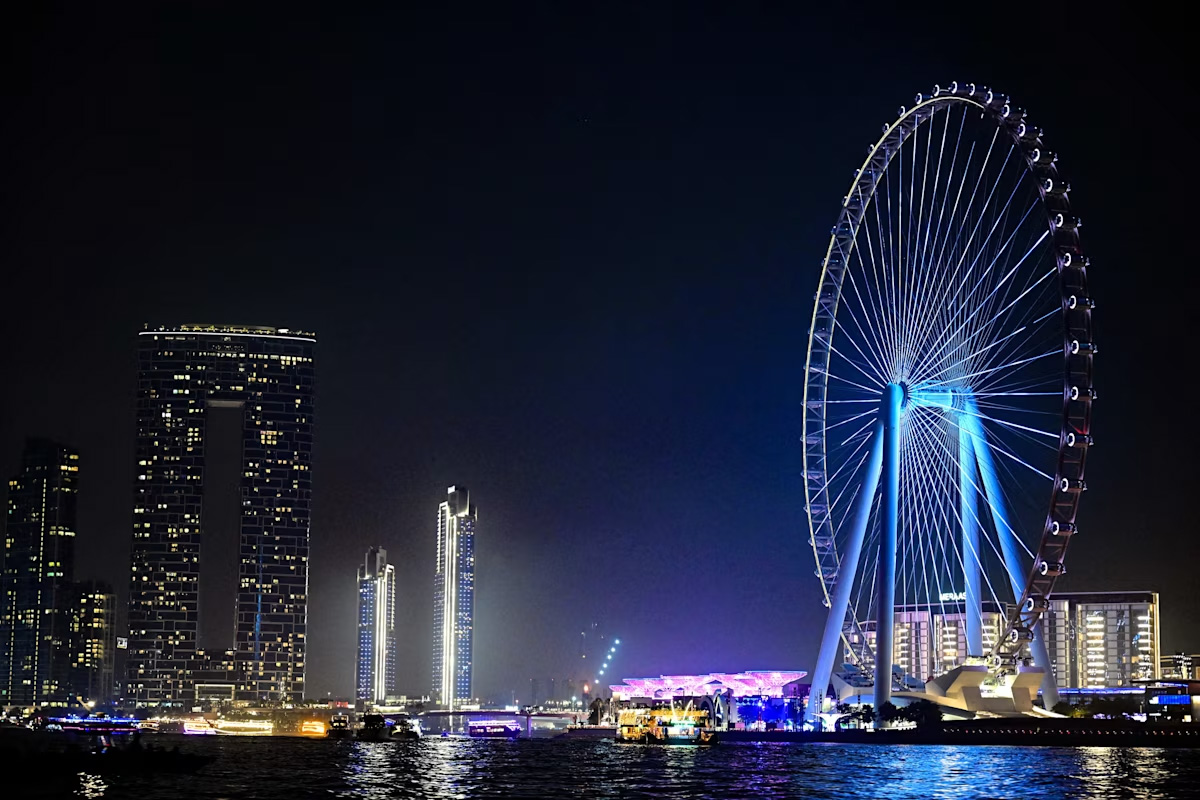
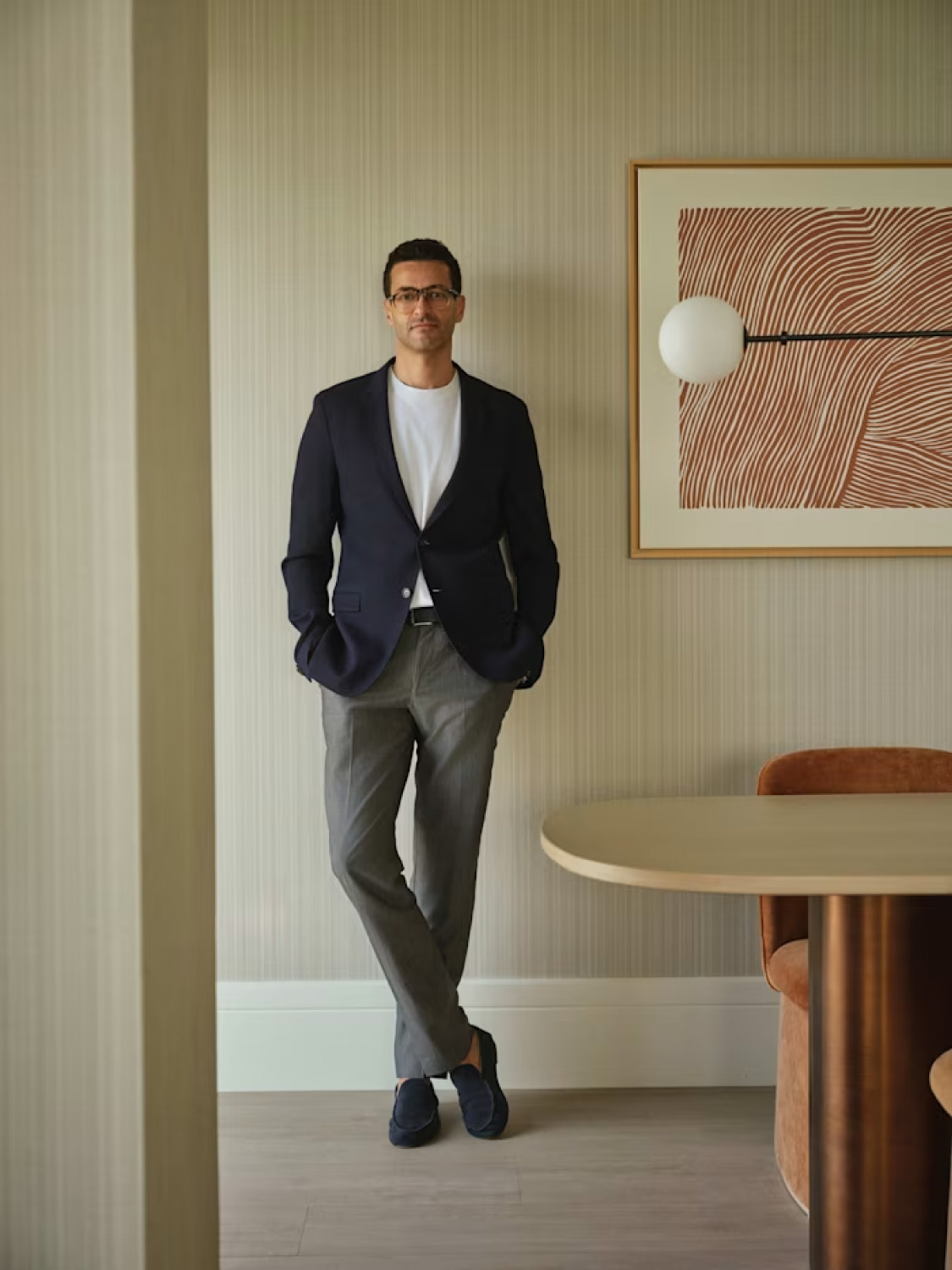
Abaza, speaking separately during a photo shoot at the Delano hotel on Dubai’s Bluewaters Island, describes a recalibrated market in which “there’s a big disparity between where sellers expect to be and where buyers want them to be”. The island is also where the Oppenheim Group is building its regional headquarters. Many owners, he says, are under little pressure to transact: “It’s not need-based sales.” Those who have to sell may struggle; everyone else can wait. “It’ll be somewhere in the middle at some point,” he says. “And we’ll be there.”
Ghavidel questions whether the group is equipped to capture any potential. “We don’t need more brokers. We need better-quality brokers.” After 20 years in Dubai property, he has more than 300 brokers in his WhatsApp contacts, simply finding someone to list a property is not difficult. “Anybody with a subscription to Property Finder can put an ad up there,” he says. At the super-prime end, what matters is whether an agent can bring the buyer with them. These are often second, third or fourth homes, he says, and the useful broker is one who has already sold comparable properties in London, New York or Los Angeles. “We need agents with an international record who have actively sold in those markets.”
Cummings points to Charles Cutting, formerly head of sales at Savills’ Mayfair office, who moved to Dubai and, Cummings says, “knows how to utilise that international Rolodex”. “You’ve got to differentiate yourself by truly bringing in the international experience and the network,” he says.
Ghavidel is open to giving Oppenheim Group a mandate, but is wary. He has worked with other “very high profile” agents who arrive, film the property, promise “we’re gonna sell this in no time” and then, he says, “don’t even bring one person through the door. Not one.”
Oppenheim remains coy about a Dubai-based TV series. His preference would be to bring Selling Sunset itself to the city. “I don’t want to get ahead of ourselves,” he says. It will depend on production timing — and, one imagines, geopolitics.
The Oppenheim Group’s business case rests on reach. In a tougher market, Oppenheim argues, “it’s more important . . . to be able to market Dubai properties with a global platform than ever before”. Abaza sees that working in both directions: taking Dubai listings to buyers overseas, while giving those buyers a familiar name through which to enter the market. But recognition only gets them so far. “We’re going to have educational campaigns as opposed to sales campaigns,” he says, explaining “what’s been happening in Dubai, where it’s going, why we think it’s such an attractive proposition” over the next 10, 20 or 30 years. His most basic pitch is blunter still: “If you want to not pay tax — or pay very low [tax] — there’s still nowhere better in the world to be.”

But Dubai’s super-prime market is not unilateral. Alongside the internationally oriented luxury market is an Emirati one, shaped by different neighbourhoods, relationships and codes. Bluewaters sits firmly in the first. Areas such as Al Khawaneej and Nad Al Sheba belong more to the second: established local residential networks where the houses, the buyers and often the business itself are far less public.
Abaza recognises the distinction. The difference is not that Emirati buyers are closed to outsiders, he says, but that relationships are already deeply established. People know who they trust, often through advisers they have dealt with for decades.
That makes the challenge rather different from attracting an overseas buyer who already recognises the Oppenheim Group name. Farid Noufaily, founder of Dubai architecture firm FNArchitects, has spent more than a decade designing homes for Emirati clients. His first answer to what an international broker might misunderstand about that market is one word: “Discretion.” At the upper end, he says, privacy is often part of the luxury itself, relationships develop slowly and trust is hard won. A brokerage does not necessarily need dozens of people with those connections — Noufaily thinks “one or two players” can be enough — but their standing matters. “It needs to be owner to owner. Boss to boss,” he says. As Cummings notes, international companies eventually discover “you basically need to do UAE real estate the UAE way”.
Oppenheim Group’s Dubai office will be judged on deals. It launched last month with 20 brokers and, within a week, was reporting a portfolio of property listings worth more than Dh350mn ($95.3mn). “The statistics are already with them,” says Ghavidel; at the very top end, Dubai simply has far more transactions relative to the size of the market than the US or Europe. “If they can actually deliver the promise, I think they can achieve [success] very quickly.”
Oppenheim, back in Los Angeles, sets a clear benchmark: “I would say within a couple years, Dubai will be our most successful office in terms of sales volume.” On the other side of the Zoom screen, in Dubai, Abaza is the one charged with making that prediction real — winning the mandates, finding the buyers and, perhaps harder still, earning trust in parts of the city where the Oppenheim Group name alone carries less weight. He smiles. “No pressure whatsoever.”




 But the benefits of a cooler market do not alone explain why Oppenheim was willing to press ahead. For all its global fame, the Oppenheim Group has kept a deliberately small physical footprint, with roughly 130 agents across three Southern California offices and a smaller operation in Cabo San Lucas, Mexico. Jason and his twin brother Brett have not spent the past decade chasing booming property markets. “I did not go into Nashville when it blew up, did not go into Austin, did not go into Miami,” Oppenheim asserts.